This guide is your ultimate resource for discovering what is the best VGA card for gaming in 2026 tailored specifically for the discerning gamer who balances life responsibilities with a passion for high performance virtual worlds. We understand that finding the perfect graphics card can be overwhelming amidst a rapidly evolving market especially when you need value for money without sacrificing the immersive experiences you crave. Whether you are looking to upgrade an aging system build a new rig from scratch or simply optimize your current setup for the latest AAA titles this comprehensive article provides clear actionable insights. We will navigate through essential factors such as resolution refresh rates budget considerations and future proofing your investment ensuring you make an informed decision that enhances your relaxation and competitive edge. Learn how to avoid common pitfalls understand current gaming trends and select a VGA card that truly aligns with your gaming habits and lifestyle making every hour spent gaming truly count. This resource is designed to cut through the marketing hype and deliver practical real world advice for achieving optimal performance.
What is the best GPU for 1440p gaming in 2026?
For gamers targeting crisp 1440p resolution and high refresh rates, the NVIDIA GeForce RTX 4070 SUPER or its expected 2026 successor, the RTX 5060 Ti, currently offers an excellent balance of performance and value. On the AMD side, the Radeon RX 7800 XT provides competitive rasterization performance and often more VRAM for the price, making it a strong contender for smooth, immersive 1440p experiences in both competitive and AAA titles. Your choice depends on whether you prioritize NVIDIA's DLSS and ray tracing prowess or AMD's raw raster performance and VRAM.
Which graphics card offers the best value for money in gaming this year?
The best value graphics card often shifts, but in 2026, for the average gamer balancing budget with performance, cards like the NVIDIA GeForce RTX 4060 Ti or the AMD Radeon RX 7700 XT stand out. These GPUs provide robust 1080p and capable 1440p performance, allowing you to enjoy most modern titles at high settings without breaking the bank. They hit a sweet spot for many US gamers who want to enjoy current trends, social gaming, and still have funds for other life priorities or in-game purchases, offering significant bang for your buck.
How much VRAM do I actually need for modern gaming in 2026?
With games becoming more graphically intensive, VRAM requirements are increasing. For solid 1080p gaming in 2026, 8GB is generally sufficient, but 12GB offers better future-proofing. For 1440p, 12GB is becoming the standard, with 16GB being ideal to handle high-resolution textures and complex game worlds. If you're aiming for 4K gaming, 16GB is a minimum, and 24GB or more is highly recommended to prevent performance bottlenecks, especially when ray tracing is enabled. Always consider the games you play and your desired resolution when assessing VRAM needs.
Should I choose NVIDIA or AMD for my next gaming VGA card?
Choosing between NVIDIA and AMD depends on your priorities. NVIDIA typically excels in ray tracing performance and offers the more mature DLSS upscaling technology, which is great for pushing frames in demanding games. Their ecosystem also benefits streamers with strong encoding capabilities. AMD often provides superior rasterization performance per dollar, frequently including more VRAM, and their FSR upscaling is open-source and widely compatible. If cutting-edge ray tracing and AI upscaling are paramount, NVIDIA might be preferred. If raw power, VRAM capacity, and overall value are your focus, AMD often presents a compelling alternative for balancing performance and cost.
Can my current power supply handle a new high-end graphics card upgrade?
It's crucial to verify your power supply unit's (PSU) wattage and available PCIe power connectors before upgrading to a new high-end VGA card. Modern GPUs can be very power-hungry. Always check the recommended PSU wattage for your desired graphics card (usually found on the manufacturer's product page) and ensure your PSU has enough headroom (add 100-200W for other components). Also, confirm you have the correct 6-pin, 8-pin, or newer 12VHPWR connectors. An inadequate PSU can lead to system instability, crashes, or even component damage, making this a vital pre-purchase check.
What are the common signs it's time to upgrade my VGA card?
You'll know it's time to upgrade your VGA card when your gaming experience is consistently falling short of your expectations. Common signs include significantly low frame rates (below 60 FPS) in your favorite games, even at lower settings, frequent stuttering, texture pop-in, or an inability to run new titles at playable settings. If your card struggles with popular 2026 trends like VR experiments or the latest AAA releases, or if your friends are enjoying vastly superior visuals and smoothness in social gaming sessions, it's a clear indicator that an upgrade would dramatically enhance your enjoyment and make your precious gaming time more rewarding.
How does balancing gaming with life influence my VGA card choice?
For gamers balancing jobs and family, selecting a VGA card is about smart investment and maximizing limited leisure time. It means choosing a card that offers strong, reliable performance for your preferred games and resolutions, ensuring smooth play without constant tweaking. You want value for money, a card that will perform well for several years, and perhaps one that supports social gaming and current trends without demanding excessive maintenance or frequent upgrades. This approach ensures your gaming sessions are for relaxation and fun, not troubleshooting, making every hour spent gaming truly impactful and stress-free.
For many US gamers, gaming isn't just a hobby; it's a vital escape, a way to connect with friends, unwind after a long day, or even build new skills. With an average age around 36, most of us are balancing demanding jobs, family commitments, and life’s myriad responsibilities. The last thing we need is a frustrating gaming experience due to outdated hardware. In fact, recent data shows that 87% of US gamers play regularly, often dedicating 10+ hours a week, highlighting gaming's central role in our lives. So, when it comes to upgrading, the burning question isn't just "which card is fastest?" but "what is the best VGA card for gaming that fits my life, my budget, and my desire for smooth, immersive play?" You want performance without endless research, value without compromise, and a system that keeps up with the latest titles and social gaming trends.
The graphics card, or VGA card, is the heart of your gaming PC, directly influencing everything from frame rates and visual fidelity to the overall smoothness of your gameplay. A poor choice can lead to stuttering, low-resolution textures, and a general lack of enjoyment, turning a relaxing session into a stressful one. This comprehensive guide cuts through the technical jargon and marketing hype to provide clear, actionable advice. We’ll help you navigate the complex landscape of 2026’s best graphics cards, addressing common pain points like performance bottlenecks, budget constraints, and the fear of making the wrong investment. By the end, you’ll be equipped with the knowledge to confidently choose a VGA card that delivers the best possible gaming experience, allowing you to maximize your precious gaming time and truly enjoy every moment, whether you are diving into a new AAA epic or catching up with friends in a cozy co-op title.
Why is choosing the right VGA card so important for busy gamers?
As busy adults, our gaming time is precious. We game to relax, to socialize on platforms like Discord, and sometimes even to compete or learn new things. A sub-par VGA card can quickly ruin that experience, leading to frustrating performance issues that eat into your limited free time. Imagine finally sitting down to play that trending new game, only to be met with low frame rates or visual glitches. It’s a common pain point. Investing in the right VGA card ensures that your gaming sessions are smooth, immersive, and truly enjoyable, letting you fully de-stress and make the most of your moments in virtual worlds without dealing with technical headaches.
What factors truly determine the best VGA card for your gaming setup?
Determining the best VGA card isn't about finding the single most powerful one; it's about finding the best fit for your specific needs. The key factors include your monitor's resolution (1080p, 1440p, 4K), its refresh rate (60Hz, 144Hz, 240Hz), your budget, the games you play (AAA titles vs. esports vs. indie), and your existing PC components like your CPU and power supply. For example, if you primarily play social, cozy games or free-to-play titles at 1080p, a top-tier 4K card is overkill and a waste of money. Conversely, if you want to experience the latest VR experiments or competitive esports at high refresh rates, a powerful card is essential. Balancing these elements ensures you get the most value for your investment.
Key Considerations for VGA Card Selection:
- Resolution and Refresh Rate: Match your card to your monitor. High resolution and refresh rate demand more power.
- Budget: Set a realistic spending limit. Excellent performance exists at various price points.
- Games You Play: Different genres have different graphical demands.
- CPU and Power Supply: Ensure your other components can handle a powerful new GPU.
- VRAM: Essential for higher resolutions and detailed textures; aim for 12GB+ for modern gaming.
- Ray Tracing and Upscaling: Consider support for technologies like DLSS or FSR for enhanced visuals and performance.
Which are the top VGA cards for 4K gaming in 2026?
For gamers seeking the pinnacle of visual fidelity and uncompromising performance at 4K resolution, 2026 offers some truly phenomenal VGA cards. These are the titans capable of delivering stunning visuals and smooth frame rates in demanding AAA titles. The NVIDIA GeForce RTX 5090 is expected to lead the pack, offering unparalleled raw power and advanced ray tracing capabilities, making it ideal for those who want the absolute best without budget constraints. Its AMD counterpart, likely the Radeon RX 8900 XT or a future iteration, will also compete strongly, often providing excellent rasterization performance per dollar. These cards are designed for gamers who prioritize immersive single-player experiences, appreciate photorealistic graphics, and have the high-refresh-rate 4K monitors to match. They represent the bleeding edge of GPU technology, ensuring future-proof performance for years to come.
What is the best VGA card for competitive 1440p gaming on a budget?
Many US gamers find 1440p to be the sweet spot, offering a significant visual upgrade from 1080p without the extreme hardware demands of 4K. For competitive 1440p gaming on a sensible budget, balancing performance and cost is key. Look towards cards like the NVIDIA GeForce RTX 4070 SUPER or its anticipated successor, the RTX 5060 Ti, which provide excellent performance for high refresh rates in popular esports titles and demanding AAA games at 1440p. On the AMD side, the Radeon RX 7800 XT or its upcoming equivalent offers compelling value, often providing more VRAM and strong rasterization performance, making it a favorite for many value-conscious gamers. These cards are perfect for balancing crisp visuals with the high frame rates needed for fluid, responsive gameplay, making them ideal for gamers who want to excel in titles like Valorant, Apex Legends, or Call of Duty while still enjoying visually rich single-player adventures.
Are there excellent budget-friendly VGA cards for 1080p gaming?
Absolutely! Not everyone needs or wants to game at 4K or 1440p. For many, 1080p gaming remains the standard, offering fantastic visuals and smooth performance at an accessible price point, especially for social gaming, free-to-play titles, and older favorites. For robust 1080p performance, especially at high refresh rates, cards like the NVIDIA GeForce RTX 4060 or its 2026 successor, and AMD's Radeon RX 7600 XT or its next iteration, are phenomenal choices. These cards provide ample power for running most modern games at high settings, delivering consistent 60+ FPS, and often pushing well beyond for esports titles. They offer exceptional value, allowing you to enjoy your favorite games, engage in social play, and explore new experiences without breaking the bank. These are great options for those who prioritize value for money and reliable performance without chasing the bleeding edge.
How do NVIDIA and AMD compare for gaming performance in 2026?
The rivalry between NVIDIA and AMD continues to drive innovation, offering distinct strengths in 2026. NVIDIA generally maintains a lead in raw ray tracing performance and often offers more mature upscaling technology with DLSS (Deep Learning Super Sampling), which is crucial for maximizing frame rates in visually intensive games. Their cards are often preferred by streamers and content creators due to superior encoding capabilities. AMD, on the other hand, frequently offers better rasterization performance per dollar, often providing more VRAM in their mid-range and high-end cards, which is a significant advantage for future-proofing and high-resolution textures. Their FSR (FidelityFX Super Resolution) upscaling technology is open-source and compatible with a wider range of GPUs, offering flexibility. Your choice often comes down to specific game priorities: if ray tracing and cutting-edge features are paramount, NVIDIA might edge out; if raw power and VRAM for the price are key, AMD shines.
What role does VRAM play in modern gaming and how much do I need?
VRAM, or Video Random Access Memory, is crucial for storing game textures, models, and other graphical data, especially at higher resolutions and settings. In 2026, with game worlds becoming increasingly detailed and textures more complex, VRAM requirements have steadily climbed. For 1080p gaming, 8GB of VRAM is generally sufficient, though 12GB offers more breathing room. For 1440p, 12GB is becoming the new standard, with 16GB being ideal for enthusiasts. When you jump to 4K, 16GB is a minimum for many modern titles, and 24GB or more is highly recommended to avoid performance bottlenecks, especially with ray tracing enabled. Insufficient VRAM can lead to stuttering, texture pop-in, and a degraded visual experience, so it’s wise to consider future demands when making your purchase, especially if you plan to keep your card for several years.
How can I ensure my new VGA card is compatible with my existing PC?
Compatibility is a common concern for gamers upgrading their hardware. Before purchasing a new VGA card, you need to check several key areas to avoid setup issues. First, physically check your PC case for enough space; modern GPUs can be quite long and thick. Next, verify your power supply unit (PSU) has enough wattage and the correct PCIe power connectors (e.g., 6-pin, 8-pin, 12VHPWR). A general rule is to add 100-200W to the card's stated TDP for system overhead. Also, ensure your motherboard has a compatible PCIe x16 slot, which nearly all modern motherboards do. Finally, your CPU shouldn't be a significant bottleneck; pairing a powerful GPU with a very old or weak CPU can lead to suboptimal performance. A quick online search for "CPU [your CPU model] GPU [new GPU model] bottleneck" can give you a good indication.
When is the best time to upgrade my VGA card for optimal value?
Timing your VGA card upgrade can save you money and maximize performance. Historically, the best times to buy are often several months after a new generation of cards launches, when prices stabilize, and previous-generation cards see significant discounts. Major sales events like Black Friday or Cyber Monday can also offer compelling deals. However, for busy gamers, waiting indefinitely isn't always practical. A good rule of thumb is to upgrade when your current card can no longer deliver satisfactory performance (e.g., consistent frame rates below 60 FPS) in the games you want to play, or when a new card offers a substantial performance leap (e.g., 50% or more) for a price you are comfortable with. Don't chase every minor upgrade; focus on meaningful improvements that enhance your personal gaming experience without undue financial strain.
What are the best practices for installing a new VGA card?
Installing a new VGA card might seem daunting, but it's a straightforward process if you follow a few steps. First, always power down your PC and unplug it from the wall. Discharge any static electricity by touching a grounded metal object. Open your PC case and locate your old GPU; carefully unscrew it, unclip the PCIe retention tab, and gently pull it out. Insert the new VGA card firmly into the PCIe x16 slot until it clicks, then secure it with screws. Connect all necessary PCIe power cables from your PSU. Close your case, plug in your PC, and power it on. Once in Windows, download and install the latest drivers directly from NVIDIA or AMD's official websites. A clean driver installation (using DDU, Display Driver Uninstaller, first) is recommended to prevent software conflicts and ensure optimal performance from your new hardware.
How do current gaming trends influence VGA card choices?
Gaming trends in 2026 significantly shape what gamers look for in a VGA card. The rise of social and cozy games means many gamers aren't always chasing maximum frame rates but still want smooth, visually pleasing experiences. Free-to-play titles continue to dominate, requiring cards that can run them well without a huge initial investment. Esports viewing and participation are massive, demanding high refresh rates for competitive edge. VR experiments are gaining traction, pushing for powerful GPUs capable of handling immersive virtual worlds. Cross-play between mobile, PC, and consoles means developers are optimizing for various platforms, but PC still offers the highest fidelity. Finally, the influence of creators and streamers means features like good encoding performance and stable drivers are highly valued. These trends suggest a balanced approach: enough power for your preferred games, good value for money, and features that support your broader gaming ecosystem, including social interaction and potential content creation.
FAQ Section
What is the minimum VRAM for 1440p gaming?
For comfortable 1440p gaming in 2026, 12GB of VRAM is generally considered the minimum for smooth performance in most modern titles, with 16GB being ideal for more demanding games and future-proofing against increasingly complex textures and graphical assets. This ensures you avoid stuttering or texture pop-in.
Does my CPU matter for VGA card performance?
Yes, your CPU absolutely matters. An outdated or weak CPU can bottleneck even the most powerful VGA card, meaning the GPU waits for the CPU to process data, leading to lower frame rates than the card is capable of. Aim for a balanced system where your CPU and GPU are well-matched to avoid performance limitations.
Is it worth buying a used VGA card?
Buying a used VGA card can offer significant savings, especially on previous-generation models, making it a great budget option. However, exercise caution: always buy from reputable sellers, check for warranty status, and thoroughly test the card upon receipt. Consider the risks of wear and tear or potential misuse by previous owners.
What's the difference between DLSS and FSR?
DLSS (NVIDIA) and FSR (AMD) are both upscaling technologies designed to improve frame rates by rendering games at a lower resolution and then intelligently reconstructing them to your monitor's native resolution. DLSS uses AI (Tensor Cores) and machine learning for often superior image quality, while FSR is open-source, driver-level, and compatible with a wider range of GPUs, including older cards and non-AMD hardware, offering broader accessibility.
How often should I upgrade my VGA card?
Most gamers find an upgrade cycle of 2-4 years to be ideal. This timeframe typically allows for significant performance improvements between generations, making the upgrade worthwhile. However, this depends heavily on your performance expectations, budget, and the specific games you play. If your current card still meets your needs, there's no urgent need to upgrade.
Choosing what is the best VGA card for gaming in 2026 doesn't have to be a daunting task. By focusing on your specific needs, understanding your monitor's capabilities, setting a realistic budget, and considering your gaming habits, you can make an informed decision that truly enhances your experience. Whether you are aiming for unparalleled 4K immersion, competitive 1440p dominance, or excellent 1080p value, there’s a perfect card out there for you. Remember, gaming is about enjoyment and making the most of your leisure time. A well-chosen VGA card is key to unlocking that fun.
What's your biggest gaming challenge when it comes to hardware upgrades? Comment below and let us help!
Choosing the right VGA card balances performance and budget. Consider your monitor's resolution and refresh rate first. NVIDIA GeForce RTX and AMD Radeon RX series offer top choices. Future-proofing involves VRAM and newer technologies. Budget-friendly options provide excellent value for 1080p and 1440p gaming. Installation is crucial for optimal performance.
35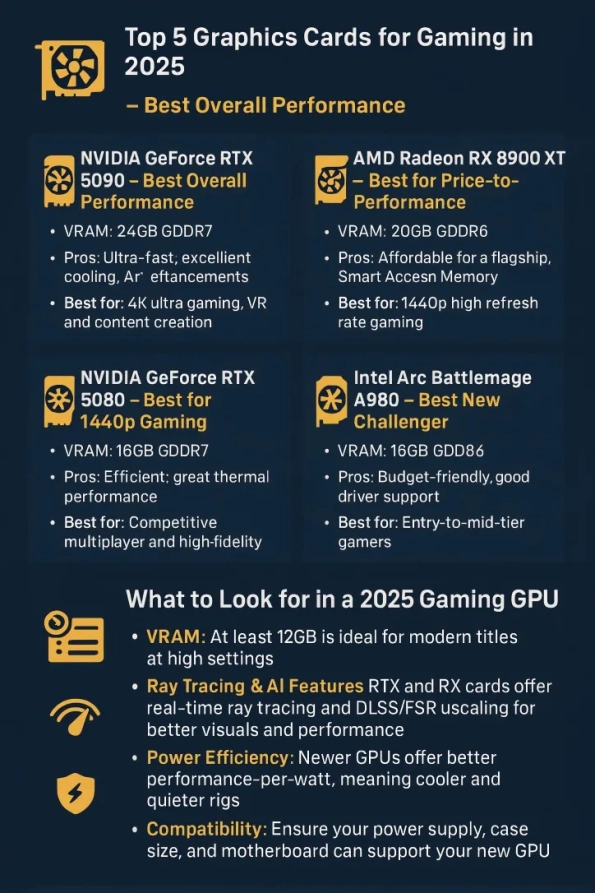


Best Graphics Cards 2026 Ultimate GPU Buyer S Guide Best Graphics Cards For Gaming. 13 Best GPUs For Gaming 2026 Top Graphics Cards Ranked Banner 5. Best Graphics Cards For 1440p Gaming 2026 Expert Reviews Guide Featured Image 5pc4h Nx . Best Video Card Buyer S Guide 2026 Expert GPU Selection Tips Featured Image Wozugz8 . Best Graphics Card 2026 Top GPUs For Gaming AI Value 71 GK950 SL. AC SL1500
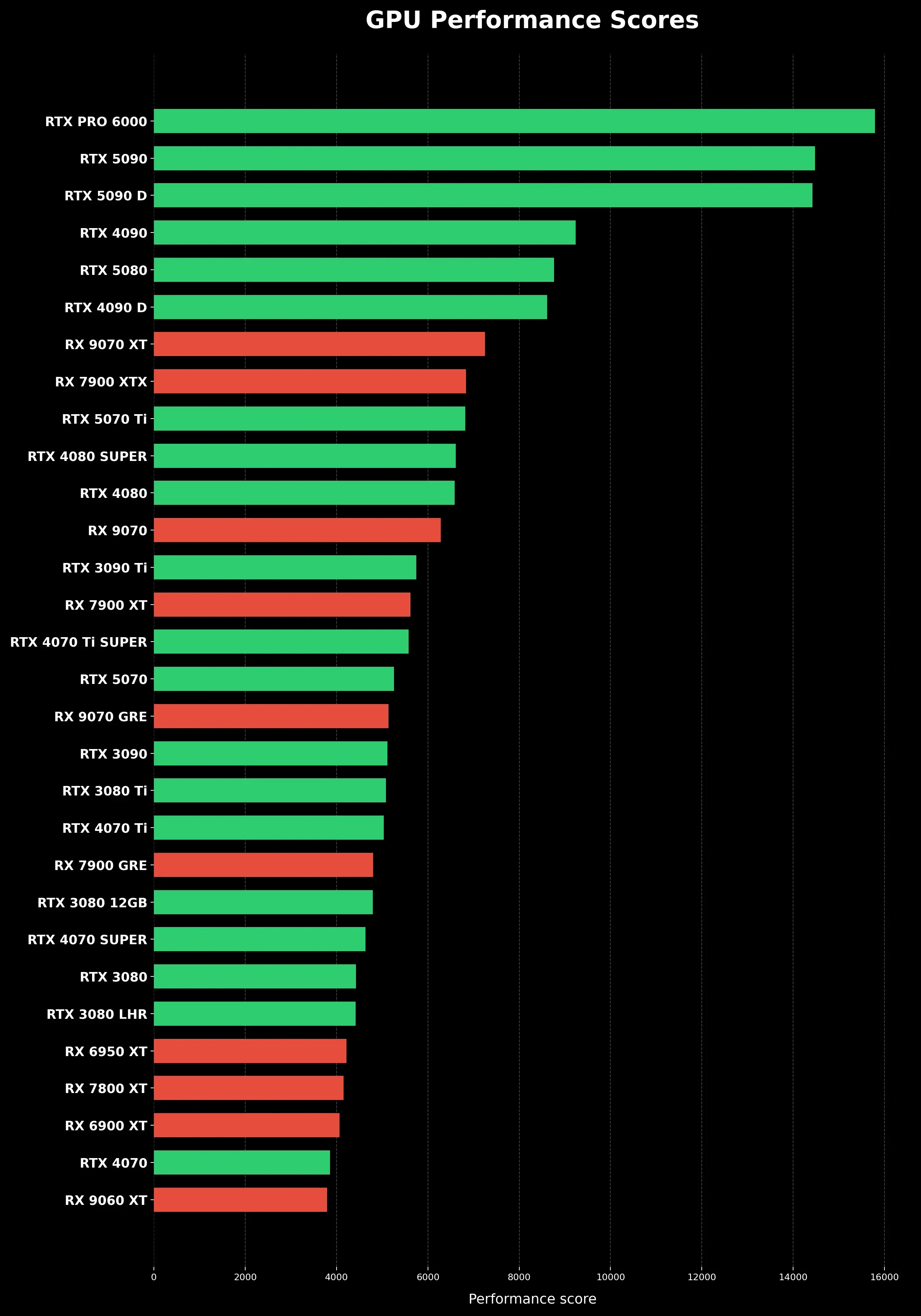

Best Graphics Card 2026 Comparison Ranking And Buying Guide For PC Gpu Performance Scores Clean Vertical. Best Graphics Card 2026 Top GPUs For Gaming AI Value 81JPZdpeH L. AC SL1500 . Best GPUs For Gaming 2026 Top VGA Cards Ranked By Performance Best Gpus For Gaming.webp. Best Graphics Card 2026 Top GPUs For Gaming AI Value Best Graphics Card 2026 . Best OLED Gaming Monitors 2026 Tom S Hardware
Best Graphics Cards For FPS Gaming 2026 Expert Competitive Guide Featured Image 08jnrrod 300x210 . The GPUs Coming In 2026 And Why They Aren T Worth The Wait The Evga Nvidia Geforce Gtx 970 Ssc Gaming Acx 2 0 Graphics Card Sitting On A Desk . Best GPU For Gaming 2026 Guide Sirius Power PC Buyserver Blog One 1300x731 . 15 Best RTX Graphics Cards Of 2026 For Premium Gaming And Creativity Top Rtx Graphics Cards 2026 Yzw86 800x450 . Best Budget Gaming GPUs 2026 Ultimate Value Guide Budget Gaming GPUs


Top 5 Best Gaming Graphics Cards In 2026 Ultimate GPU Guide YouTube . The Best Graphics Cards For Gaming In 2026 Best GPUs Of 2025 Blog Feature Image Facebook Text . Vga Card L Intro 1645486599 1 . Best RTX 2080 Graphics Cards In 2026 Our Top Choices PC Guide Best GPU For 1440p 144Hz . Best Graphics Cards 2025 Power Your PC With The Best YouTube



Vga Card For Pc Best Graphics Card . Top VGA 2026 B Ng X P H Ng Card M N H Nh Ng Mua Nh T BetterImage . Best Graphics Cards For Gaming In On 2026 You Can Buy Right Now . What Is A Good Graphics Card For Graphic Design . 9 Panduan Memilih VGA Card Untuk Komputer Gaming Jurnalpost 9 Panduan Memilih VGA Card Untuk Komputer Gaming



Latest Graphics Cards For Gaming In 2026 UK Budget 1440p 4K Ranked Best Latest Graphics Cards 2026 Uk 430x287 . The Top 11 RTX 2070 Super Graphics Cards For Gaming 2026 Review Graphics Cards 1 . Best GPUs For Gaming 2026 Top VGA Cards Ranked By Performance 6 Best GPUs For AI And Deep Learning In 2026.webp. Vga Card For Pc What Is A VGA Card . Top 10 Most Anticipated Games Of 2026 What To Watch Out For TVN GAMES IN 2026

15 Best Graphics Cards 2026 Tested For Gaming Performance Featured Image Utvs9ctp 300x210 . Info Ultimate Graphics Card Comparison Guide 2025 NVIDIA AMD Proxy.php. 2026 GPU Prices Going Up Best Graphics Card To Buy Now Best GPU . Top 5 Best Graphics Cards In 2026 For 4K Gaming Performance NoobFeed Radeon Rx 9060 . 13 Best GPUs For Gaming 2026 Top Graphics Cards Ranked Blog Banners 1 1 Scaled.webp